«Jayce Aurora Guide»: reviewing the guide by the Best-Of Jayce of Lucca
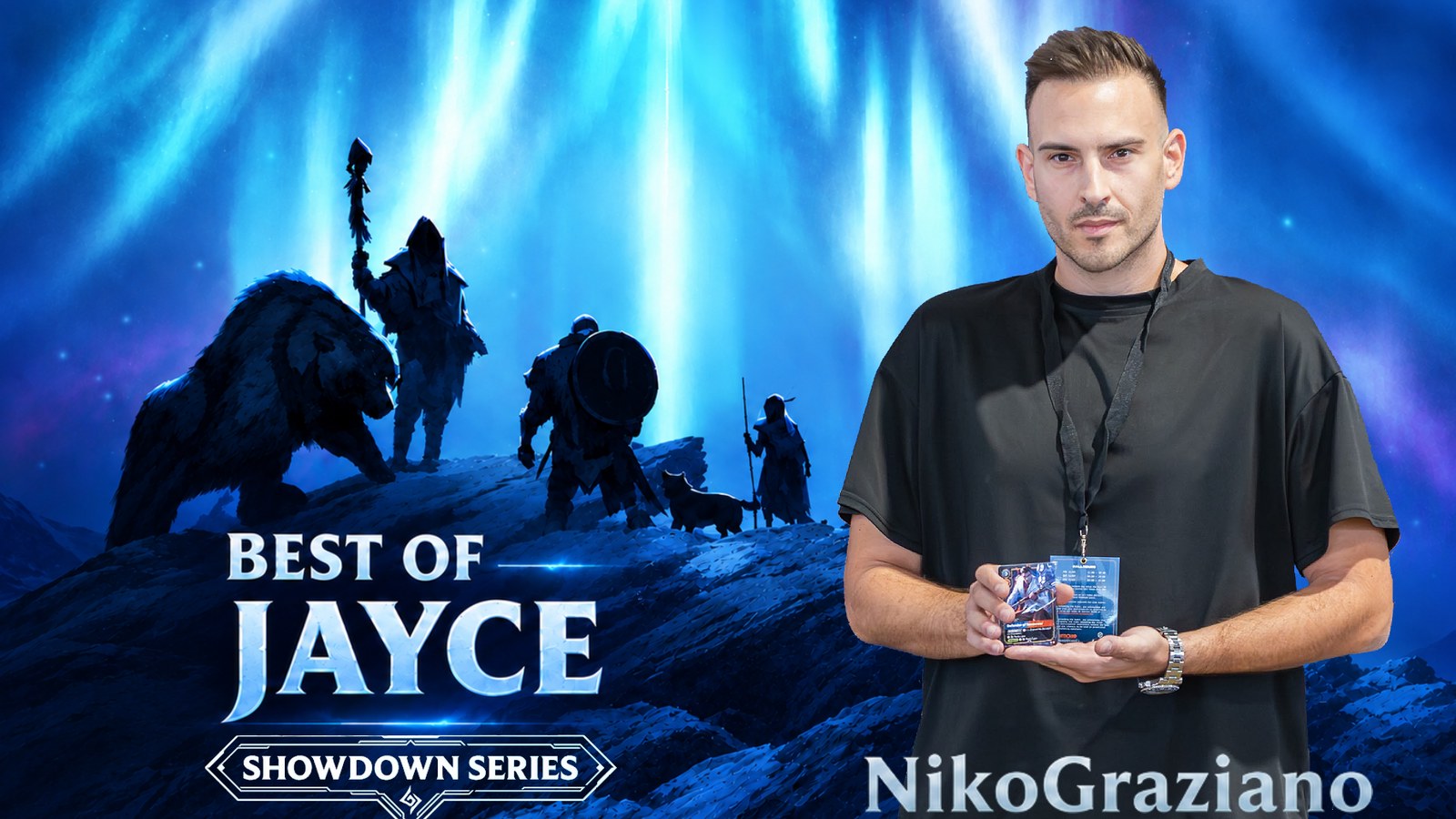
Image: the guide's cover, by SirHowl. NikoGraziano with the Best-Of Jayce card from the Lucca Showdown Series.
On 23 September NikoGraziano published his Jayce Aurora guide on Metafy: the deck he took to 10th place out of 614 at the Lucca Showdown Series, earning the metal card reserved for the best Jayce in the event. I read all of it. Here is how it is built, what it is actually worth and who should buy it — without spoiling it for you.
How to read this review
The guide is a paid product and I received a free copy from the author: reviewing it was my own decision, not something he asked for. I have no arrangement with him, and I make nothing from the link at the bottom of this page. Out of respect for paid work, you will not find the lists here, nor the turn-by-turn curve, nor the sideboard plans: I describe how the guide is built, not what is written inside it.
The credentialThe best Jayce in Lucca, with fifteen years of tables behind him
In competitive play that is always the starting point: who signs it, and what they have done. In Lucca NikoGraziano finished the Swiss 8-1-1, 10th out of 614 entrants, outside the top cut on tiebreakers but ahead of every other Jayce in the room: that is how the Best-Of Jayce metal card ended up in his hands. His only loss came against a Rengar, his only draw in the mirror. The rest of the run — Diana, Rengar, Kennen, Master Yi, Ezreal, LeBlanc — was all wins.
The second point is the history behind it. Nicolò Graziano is from Rome and has played competitive card games for over fifteen years: first Yu-Gi-Oh! at national and European level, then Magic — Vintage, Modern, Pauper — with results he lists one by one in the chapter about himself. Riftbound came later, and it shows: the guide reasons with the tools of someone who has already taken other games apart, from resource counting to reading the comprehensive rules.
One detail worth knowing: it is his first written guide, and he says so. He presents it as a living document, asks for comments and for missing matchups, and had already updated it the day after release.
The full Lucca Showdown Series standings →
The structureTwenty-three chapters, and two thirds of the text is matchups
Five sections, twenty-three chapters. It opens with the why — why Jayce and why Aurora, with a full chapter on the deck's maths — then the author introduces himself and recounts his tournament, then the deck block: the lists, the key cards, the sideboard. Then the actual play: mulligan, a tier list of the metagame and the matchups. It closes with the thanks.
The centre of gravity is the matchup section, as in every well-made guide: thirteen Legends, and on their own they account for roughly two thirds of the words. Each follows the same shape — the opponent's cards to respect, the hidden cards to keep in mind, the game plan, then the sideboard and the battlefield order. The Legends covered are Rengar, Kennen, Irelia, Akali, Nasus, Ornn, Master Yi, Vex, LeBlanc, Rek'Sai, Azir, the Jayce mirror and Ezreal. Diana is not in yet: the author told me the chapter is coming and that, for him, it is not a difficult matchup.

There are two lists, and that is a choice I appreciate: the one played in Lucca, exactly as it was, and the one rebuilt after the 18 September ban list, which is the version everything else is written on and which, the author told me, has already been through Skirmish testing since the ban.
The strengthsWhat makes it work
The maths chapter, before any list
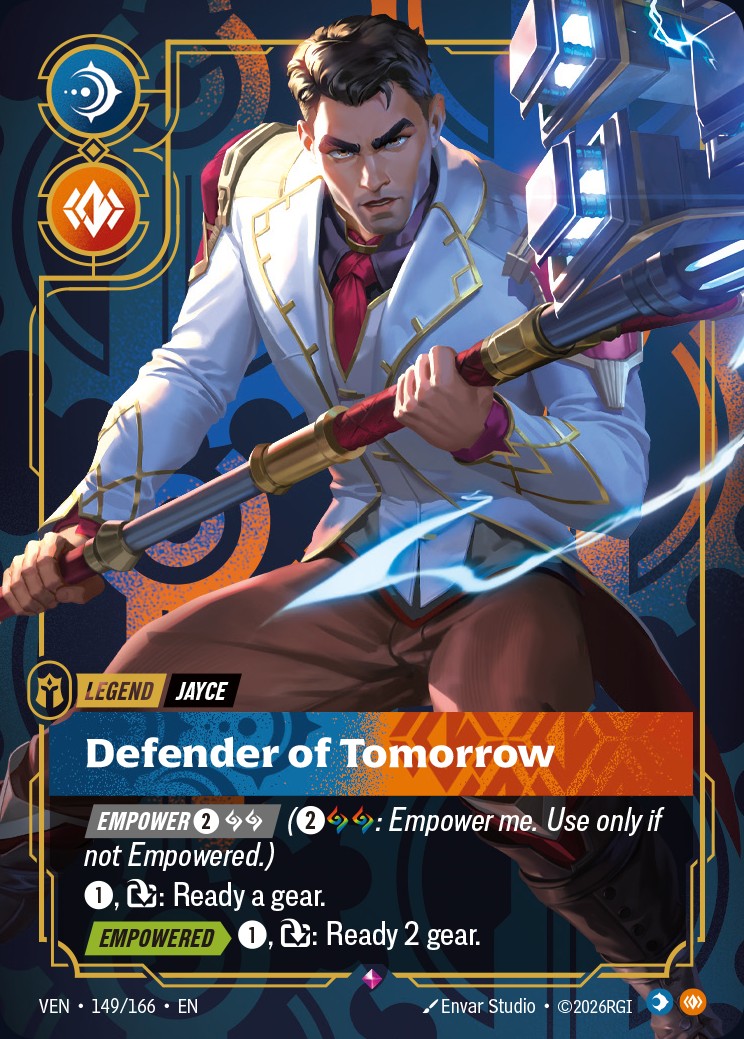
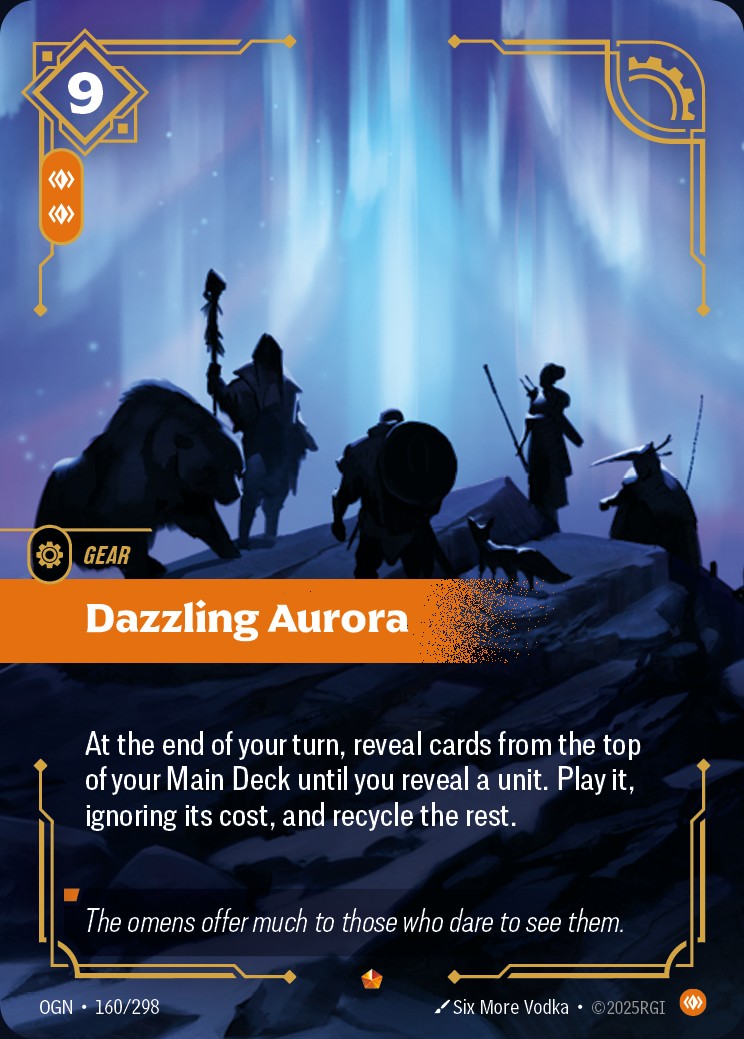
The deck has one card it needs to play by a specific turn, and everything else is built to get there. The guide starts from here: it explains turn by turn how you get there on the play and on the draw, what happens if a piece is missing, and why some cards can be played «for free» along the way while others cost you a whole turn. It is the most instructive chapter of all, because it teaches a way of counting runes that holds outside this deck too. If you read only one chapter, read this one.
The rules, quoted by paragraph number
This is the part I did not expect. At three points the guide stops and opens the comprehensive rules — rule number, verbatim — to explain why the deck's key Unit works the way it does in combat, how it fits into the chain, and how two interactions that cause arguments at the table are actually resolved. This is not theory for judges: these are situations that genuinely come up in tournaments, and knowing the answer before your opponent does is a concrete edge. In a deck guide, a piece like this is rare.
Thirteen matchups, and the sideboard changes depending on whether you won or lost game one
Every matchup has two sideboard plans, not one: the plan for game two if you won the first, and the plan if you lost it. The premise is stated — this deck wins game one often — and the consequences are reasoned card by card. On top of that comes the battlefield order in three cases: blind pick, after a win, after a loss. It is a level of detail most guides do not have, and at the table it turns into decisions made in seconds rather than minutes.
It tells you what each matchup is worth, even when it is bad
There are stated percentages, matchups called «terrible» in so many words, and a tier list the author pairs with an honest warning: S tier does not mean easy to play. A guide that tells you where the deck loses is worth more than one that promises it always wins.
Hidden cards and clock management
Two threads run through all the matchups. The first: which of the opponent's hidden cards can ruin the key turn, and when it is safe to go. The second, which almost nobody writes about: the clock. In several chapters the author reminds you that with a slow deck games you have already won can be drawn or lost on time, and says what to do about it. Anyone who has played a thirteen-round Swiss knows how much that matters.
Before you buyFour things worth knowing
None of these is a flaw: they are the shape of the product, and they tell you whether it is the right thing for you right now.
- It is in English. There is no Italian edition, even though the author is from Rome. It reads easily enough, but if written English is a struggle for you, factor that in before spending.
- It is technical from page one. Chain, Finalize, cleanup, Predict: the game's vocabulary is taken as read and there is no glossary. The rules are there, but they serve to explain advanced interactions, not to teach the game. If you go to tournaments it is pitched right; if you have only just opened your first deck it is early.
- It is the guide to a demanding deck. The author says it himself: the curve is strict, a missing piece costs a turn, and some matchups are uphill. It is not the deck to pick up to win your store tournament at the first attempt — it is the deck to learn.
- It is tied to the current metagame, and built to follow it. The list it is written on is the one rebuilt after the 18 September ban list, not the Lucca one: the author told me he has already tested it at Skirmishes since the ban, and so far it holds up. Radiance arrives on 23 October and the metagame will move again: he will keep playing Jayce Aurora as long as it works, and will update the guide explaining what changes in the list with each new expansion. This is material to use today, with a stated commitment to keep it current.
In practiceWho it is for, and who it is not for
Buy it if…
- You play Aurora, with Jayce or with another Legend: the maths of the curve and the rules on the key Unit hold for every version.
- You own the deck and get lost in the key turns: when to go, what to respect, what to keep open.
- You want to learn to read the comprehensive rules as a playing tool, not just as a referee.
- You face Aurora often: knowing what your opponent is waiting for, and which turn scares them, is the most underrated use of someone else's guide.
Skip it if…
- You have just started: everything else is taken for granted here.
- You want a deck that forgives mistakes: this one does not, and the guide is the first to say so.
- Written English is a struggle for you.
- You want something that will still hold up next year: this is tied to today's metagame, by design.
The contextThe second Italian guide in a week
Five days ago I reviewed DonCapucino's Irelia guide, by the winner of Lucca. This is the second paid guide born from the same tournament, and it is by another Italian player. That is no coincidence: Lucca put 614 people in the same hall, and those who came out of it with a result discovered they had something to sell that did not exist a year ago.
The two guides are different, and the difference says something about the market. The Irelia one is a single-deck guide by someone who plays only that. This one is the guide of someone who comes from other games and brings a method: quoted rules, maths, a tier list. Buyers are starting to have a choice, and that is the first sign a market is becoming real.
The numbers tell the same story. In five days the guide has passed thirty copies sold and has 20 ratings, all tens: a small sample, made of early buyers who are largely friends and teammates already, so take it for what it is. But thirty people paying to read an Italian player on an Italian-tuned deck, in a week, was zero a year ago.
The verdict
9 out of 10
A guide about method, written by someone who brought fifteen years of other card games into Riftbound. The grade comes from three things you will not find elsewhere: the maths chapter on the curve, the comprehensive rules quoted by paragraph number, and thirteen matchups with a double sideboard plan and battlefield order. In technical content it is the richest guide I have read on this game so far.
The missing point is a single thing, and I will explain it.
It is the author's first written guide, and it shows in the form. The matchup chapters do not all carry the same weight: the longest is almost three times the shortest. In some you get the key turn rebuilt step by step, with what to do first and what to keep open; in others a list of cards to respect and the sideboard plan, little else. The sideboard plans also change shape from one chapter to the next, and in a couple of places you have to read twice to see what comes in and what goes out. It is not a content problem — the decisions are there — but a reading one: some parts are a lesson, others a reminder.
- If you play Aurora today, with any Legend, the curve and rules sections are for you.
- If you want a deck that forgives mistakes, this is not the deck and this is not the guide.
- If you play against Aurora often, buy it anyway and read it backwards.
- It costs $15, a one-off payment.
«I think Jayce is the best Aurora deck right now, and it can only get stronger in the future.» — from the guide's closing chapter.
Source: «Jayce Aurora Guide - From Lucca Showdown Best-Of» by NikoGraziano (Nicolò Graziano), published on Metafy on 23 September 2026 and updated on the 24th. Opening image: the guide's own cover, by SirHowl. Riftbound Zone has no commercial arrangement with the author or with Metafy, and receives no commission on purchases.
Spotted an error?
To send a report you must first log in or sign up: it only takes a few seconds.