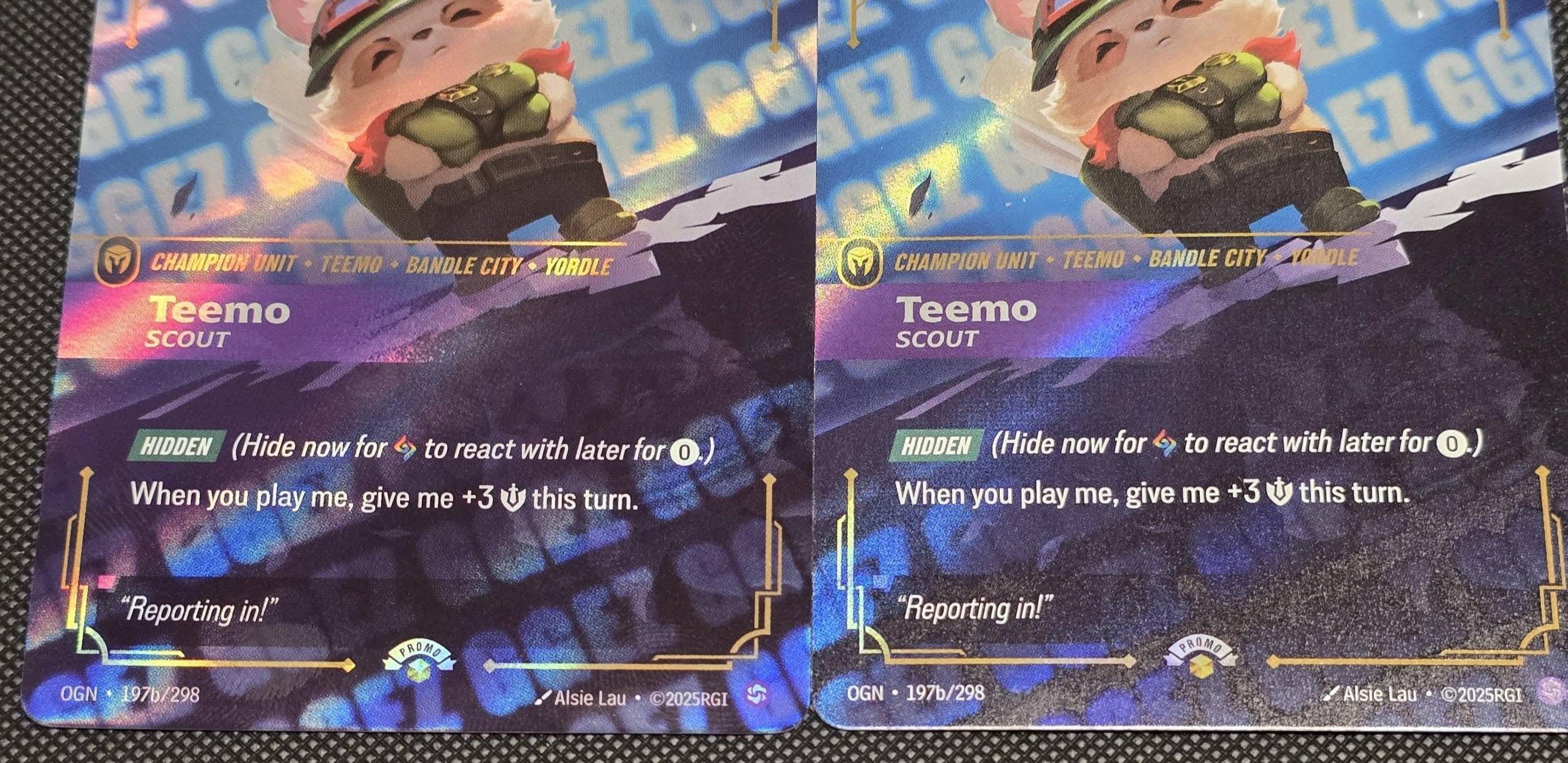
First edition or reprint: the Teemo «GGEZ» difference that could matter later
📸 In the photo above, the two versions side by side: the first edition on the right, the reprint on the left.
The Nexus Night packs from Origins — the ones that can also contain the highly sought-after Teemo, Scout in its «GGEZ» alternate art — are not all the same. They exist in two different print runs: a first edition and a reprint (or «second edition»). The differences are subtle but real, and for collectors they could matter down the line. Here's how to spot them.
For the record: the distinction between the two editions was first documented by collector @RiftboundGG and is still being refined within the community. This is not an official statement from Riot or UVS Games — these are observations shared by enthusiasts, which we report with the appropriate caution.
The contextWhat the Nexus Night Pack is
The Nexus Night Pack is the celebratory 3-card pack that Riot and UVS Games hand out at organized-play Nexus Night events: you don't buy it, you earn it by playing in stores. This is where the Teemo «GGEZ» (#197b of the League of Legends Origins set) lives — the chase card with the foil texture that repeats the word «GGEZ» across the whole background, the very card whose BGS 10 Black Label copy sold for 20,000 dollars.
Precisely because these are highly sought-after collectibles, every print detail counts. And the detail that has just emerged is that these packs (and the cards inside them) have circulated in two versions.
The two print runsFirst edition and reprint
The first edition shipped in a single wave at the game's launch, when product was extremely scarce and the cards were actually needed to play: many of those packs were therefore opened right away, and few remain sealed today. The reprint (second edition) arrived instead in multiple later waves, so it's far more common. In short: same card, same artwork, but one of the two versions is noticeably rarer than the other.
The guideHow to tell them apart: 4 signals
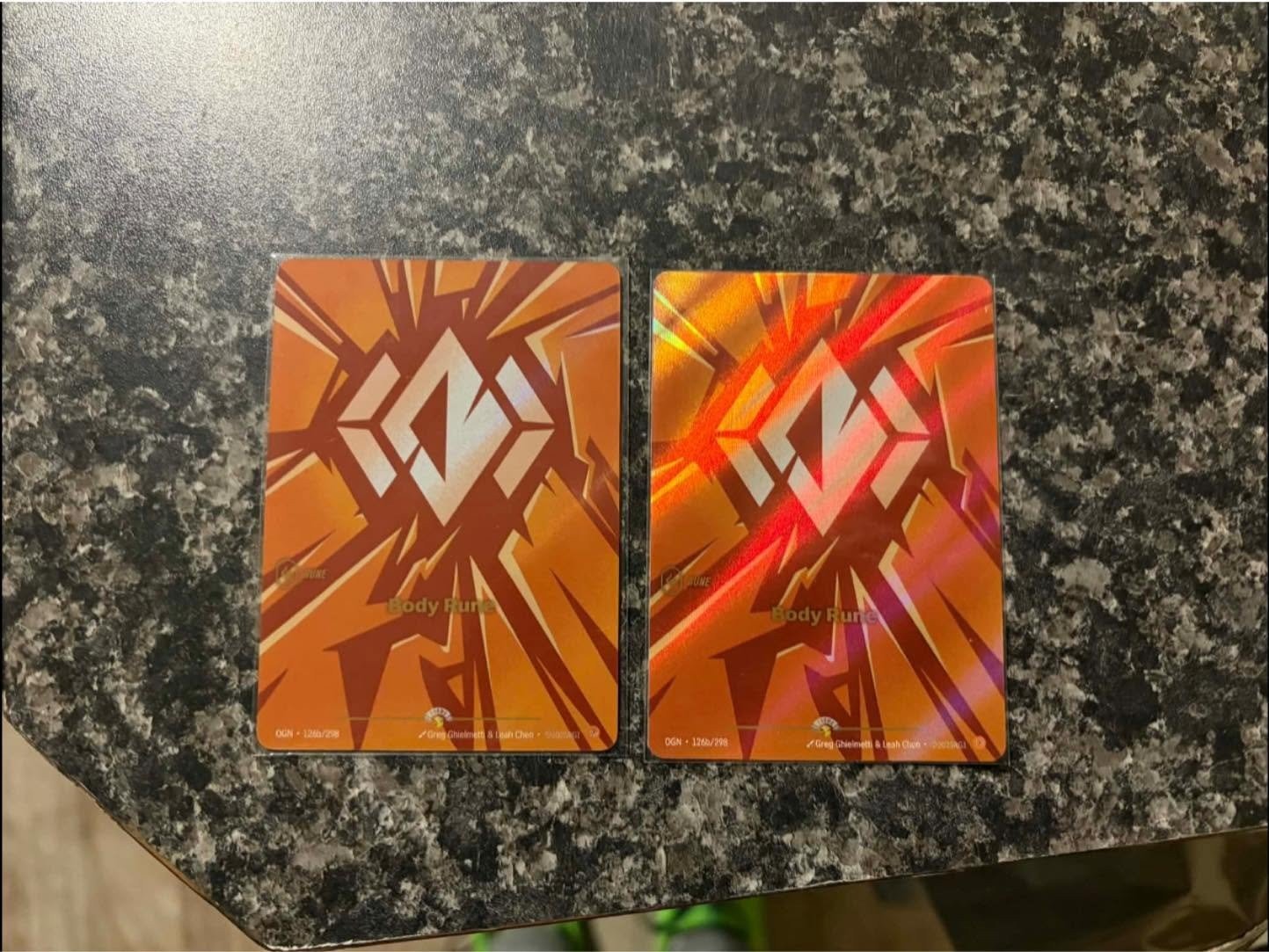
1. The card's foil
The first edition cards have a foil texture that looks more vivid and premium: the rainbow reflections are brighter and more intense. On the reprint the foil is slightly duller. It shows best when you tilt the card in the light, as in the comparison between the two Body Runes below (first edition on the right).
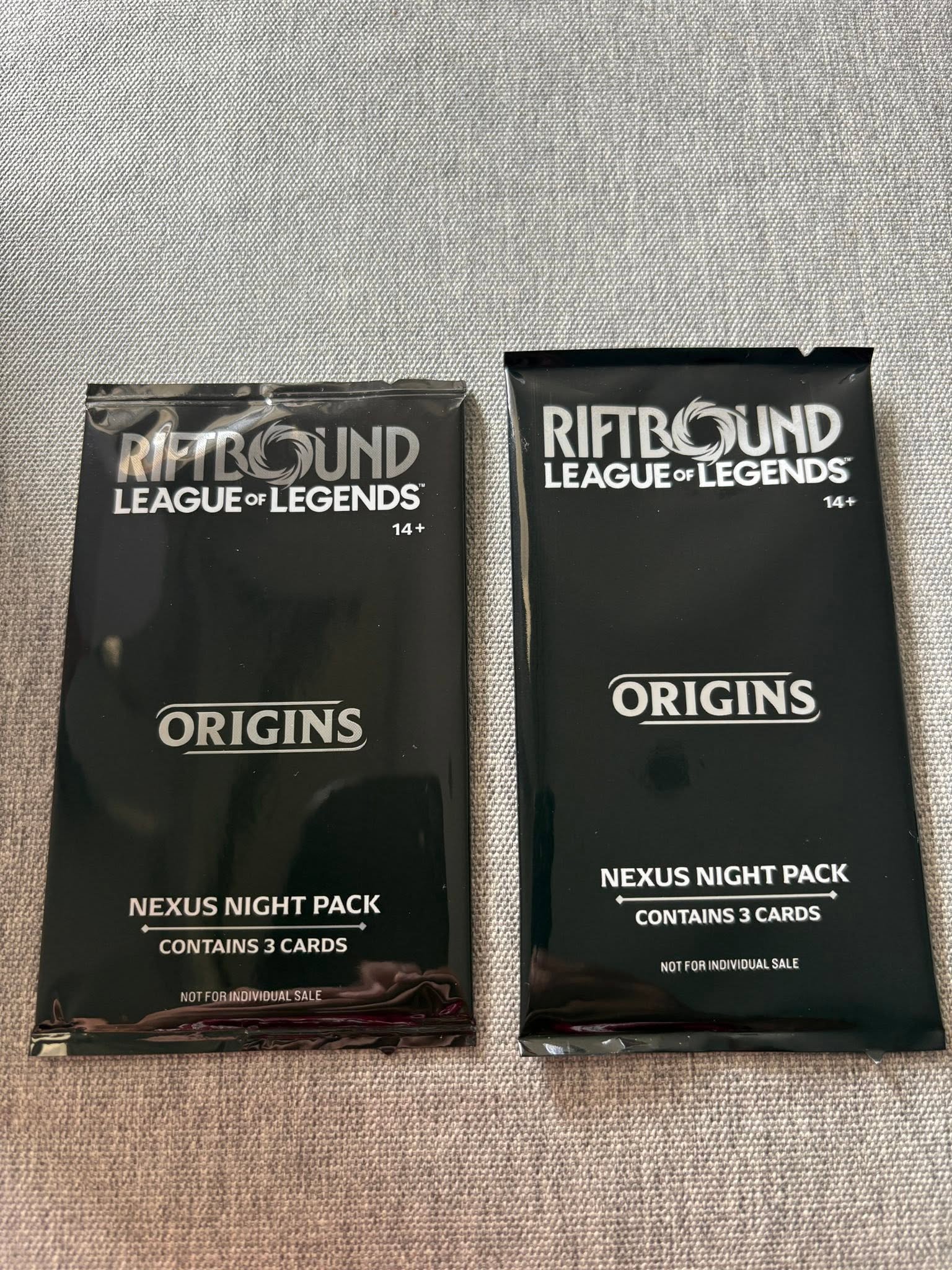
2. The wrapper size
The two print runs use different wrapper formats: the first edition one is shorter and smaller, while the reprint one is longer and larger. Placed side by side, the difference is visible to the naked eye.

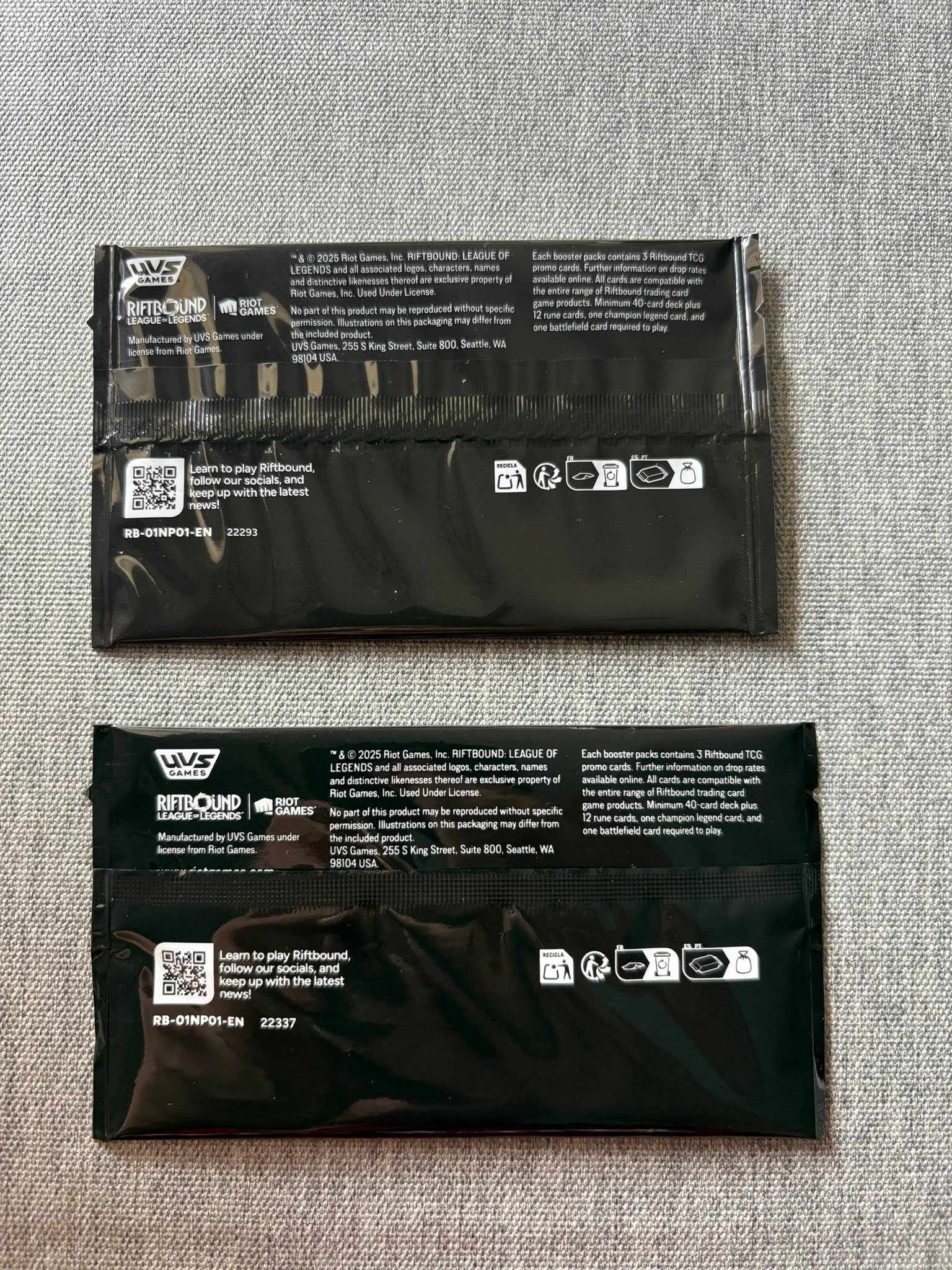
3. The back: Made in Japan vs Made in Singapore
This is the safest signal. On the back of the wrapper, the first edition reads «Made in Japan», the reprint «Made in Singapore». The layout of the elements (QR code, recycling symbols) and the print code stamped at the bottom change as well.
4. Rarity symbol and text
On the reprint cards you can spot a slightly different foil on the rarity symbol and small variations in the text compared to the first edition. These are minimal differences, useful as confirmation once the other signals already point to one of the two versions.
| Signal | First edition | Reprint (2nd ed.) |
|---|---|---|
| Card foil | More vivid and premium | Slightly duller |
| Wrapper | Shorter and smaller | Longer and larger |
| Origin (back) | Made in Japan | Made in Singapore |
| Rarity symbol / text | Original version | Slightly different foil and text |
| Print waves | One only, at launch | Several, later on |
| Sealed availability | Very scarce | More common |
Why it mattersGrading, value and fakes
Today the market still treats the two editions almost the same way, but the history of other TCGs teaches us that distinctions like this can become important. If grading companies were to start certifying the first edition separately in the future, the scarcer one could earn a price premium — exactly as happened with the early print runs of Pokémon and Magic.
There's also a more immediate reason to know these differences: authenticity. Knowing how genuine foil, wrapper and back should look is the first line of defense against unofficial reproductions, which will inevitably become more frequent as prices rise.
Our takeGood to know, too early to chase it
It must be said honestly: right now, on the loose card, there's no marking that declares the edition, and without the wrapper the distinction rests only on the foil — a clue, not proof. That's why part of the community believes that, unless an official distinction or one from the graders arrives, first and second edition will end up being grouped together. It's an analysis still in progress.
The practical advice, then, is simple and costs nothing: if you open a Nexus Night Pack, keep the wrapper (especially the back with the country of manufacture) and handle the cards with care. It costs you nothing today and could be worth something tomorrow. To follow how the values move, you'll find up-to-date figures in the Card Prices section, while to buy and sell among enthusiasts there's the community Marketplace.
In short
- 🃏 The Nexus Night packs from Origins (Teemo «GGEZ» included) exist in two editions: first edition and reprint.
- 🇯🇵 The safest signal is on the back of the wrapper: Made in Japan (first) vs Made in Singapore (reprint).
- ✨ The first edition has a more vivid foil and a smaller wrapper; it's far scarcer because it shipped in a single wave and was opened right away.
- 💡 No marking on the loose card: keep the wrapper. The distinction is still unofficial and being updated.
Frequently askedFAQ: Teemo GGEZ and the Nexus Night editions
How do I tell whether my Teemo GGEZ is a first edition or a reprint?
Look at the foil (more vivid and brighter on the first edition) and above all at the original wrapper: the first edition is smaller and reads «Made in Japan» on the back, the reprint is larger and reads «Made in Singapore». On a loose card the distinction is harder.
Is the first edition Teemo GGEZ worth more?
For now the market doesn't make a clear price distinction yet. The first edition is however much scarcer (a single wave at launch, many packs opened right away), so it could become more sought-after down the line — but it's still too early to say.
How do I recognize a first-edition Nexus Night wrapper?
It's shorter and smaller and reads «Made in Japan» on the back; the layout (QR code, recycling symbols) and the print code change too. The reprint is longer/larger and reads «Made in Singapore».
Are these differences officially confirmed?
No: they are community observations, first documented by @RiftboundGG and still being updated. Riot Games and UVS Games have not published an official distinction between the two print runs.
Source: observations by @RiftboundGG on X and community discussion on r/riftboundtcg. Analysis by the Riftbound Zone editorial team. Comparison photos from the original posts; cards © Riot Games.
Spotted an error?
To send a report you must first log in or sign up: it only takes a few seconds.