Riftbound Mulligan: How to Keep or Swap Your Opening Hand
The mulligan is the first strategic decision of every Riftbound game, and too many players rush through it. Knowing how to recognize a hand worth keeping or improving changes the outcome far more than many later plays: a good opening hand puts you on your plan from turn 1.
In this guide we look at how the mulligan works, which three elements make a hand keepable, and how your seat at the table (going first or second) should drive your choices. If you need the basics, start with how to play Riftbound.
How the mulligan works
Your opening hand is 4 cards. During the mulligan you may recycle 0, 1, or at most 2 cards and draw the same number back: your hand always stays at 4 cards. The key point is that you do not redraw the whole hand; you swap specific cards you do not need for fresh draws. It is a targeted correction, not a reset.

The three elements of a keepable hand
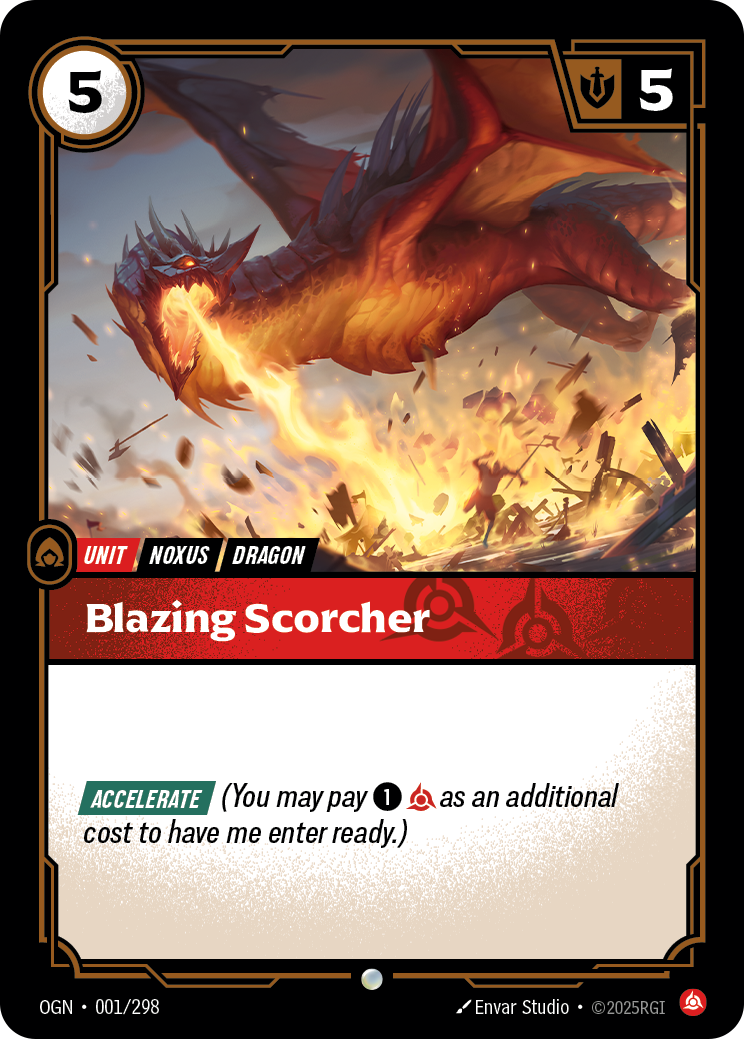 Turn 1 playBlazing Scorcher
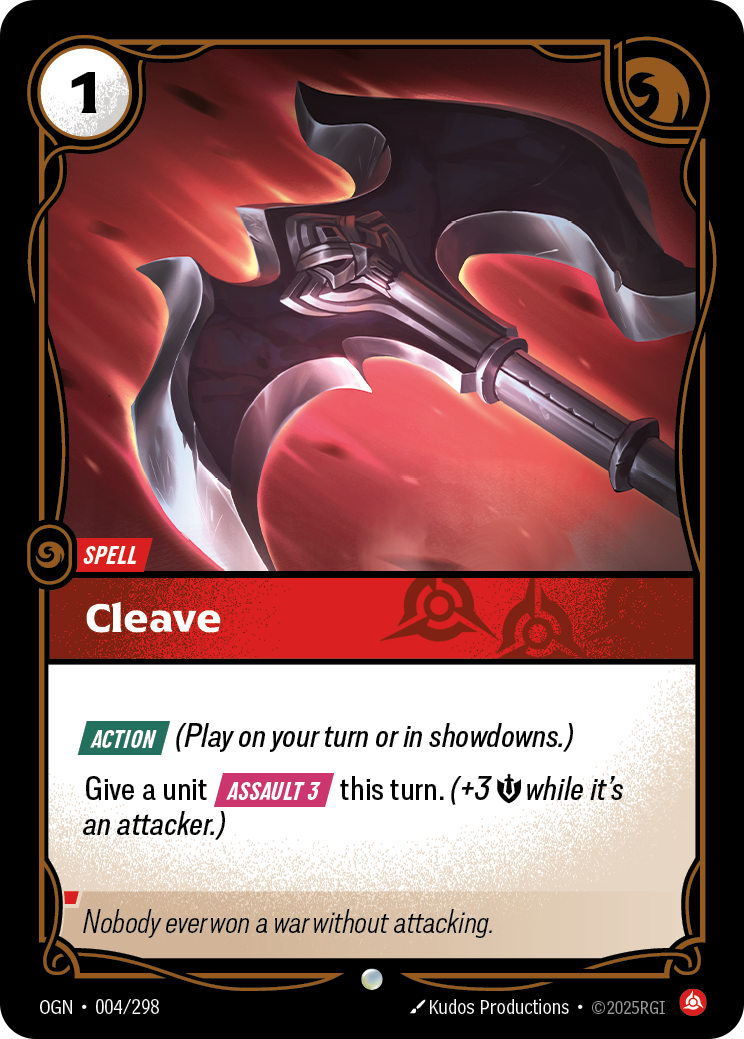 Turn 2 objectiveCleave (removal)Line to victoryKai'Sa (Legend)
A hand is keepable when it contains all three of these elements. If even one is missing, it becomes a candidate for a swap.
- A credible turn-1 play: usually a unit or an equipment you can drop with no wasted resources.
- A clear turn-2 objective: a second unit, a piece of removal, a battletrick, or a ready counter.
- A line toward your win condition: something that connects these early turns to how you intend to close the game.
What to recycle
When a hand is missing one of the three elements, choose carefully what to put back into the deck.
- Expensive cards: they risk showing up long before you can pay for them.
- Low-value situational cards: useful only in rare cases, rarely in the early turns.
- Misaligned long-game cards: late-game pieces that do not fit your tempo plans (see tempo versus value).
- Duplicates of narrow tools: a second copy of a very specific tool is often redundant early on.
Your seat changes everything
Available resources depend on who plays first, and this is a crucial factor in your mulligan decision.
Going first
You have 2 runes on turn 1 and 4 runes on turn 2. You start slower, so you favor hands with cheap plays and good early development. To understand how runes and energy produce power, see the rune, energy, and power system.
Going second
You start with 3 runes and have 5 on turn 2. This resource ramp lets you keep slightly more expensive or reactive hands, because the tempo jump on turn 2 is larger.
This timing difference must drive every choice: a hand that is perfect on the draw can be too slow on the play.
Summary
- 4-card hand; recycle at most 2 and draw that many back: targeted swaps, not a reset.
- Keep only if you have: a turn-1 play, a turn-2 objective, and a line toward victory.
- Recycle expensive, situational, misaligned long-game cards, and narrow duplicates.
- Adapt the decision to your seat: 2/4 runes on the play, 3/5 runes on the draw.
Continue with deck identity to learn which hands your archetype really wants, or test yourself with match preparation. And review the basics in how to play Riftbound.
Test yourself
Question 1How many cards make up the opening hand in Riftbound?
Question 2At most how many cards can you recycle during the mulligan?
Question 3How should the mulligan in Riftbound be correctly understood?
Question 4Which three elements make a hand keepable according to the guide?
Question 5What happens if a hand is missing even just one of the three elements?
Question 6What does a credible turn-1 play typically consist of?
Question 7Which of these is NOT listed by the guide as a card to recycle?
Question 8How many runes does the player going first have on turn 1 and turn 2?
Question 9How many runes does the player going second have on turn 1 and turn 2?
Question 10According to the guide, why can the player going second keep slightly more expensive or reactive hands?
Comments
Log in to comment.