Riftbound turn structure: every phase explained
Understanding the turn structure is the first step to playing Riftbound well. Every turn follows the same sequence of four automatic phases — summed up by the letters ABCD — followed by the phase where you actually act. Once this rhythm becomes second nature, everything else (resources, combat, points) reads far more clearly.
In this guide we go through what happens in each phase, in what order and why it matters. If this is your very first game, start with the introductory guide to Riftbound.
The four automatic phases: ABCD
At the start of your turn you resolve four phases, always in the same order. They take their names from the initials: Awaken, Beginning, Channel and Draw.
A — Awaken
You ready all of your exhausted cards — the ones turned sideways because they were used last turn: runes, units, gear and your Legend all return ready. This is when you recover the resources you spent and your units become available to act again.
B — Beginning
First you resolve every effect that triggers "at the start of your turn", then you score 1 point for each battlefield you control. This is the heart of the hold strategy: keeping control of a zone at the start of your turn is worth a point, every turn. Control two battlefields and you score two points at once.
When several effects trigger at the same time, you choose the order in which to resolve them.
C — Channel
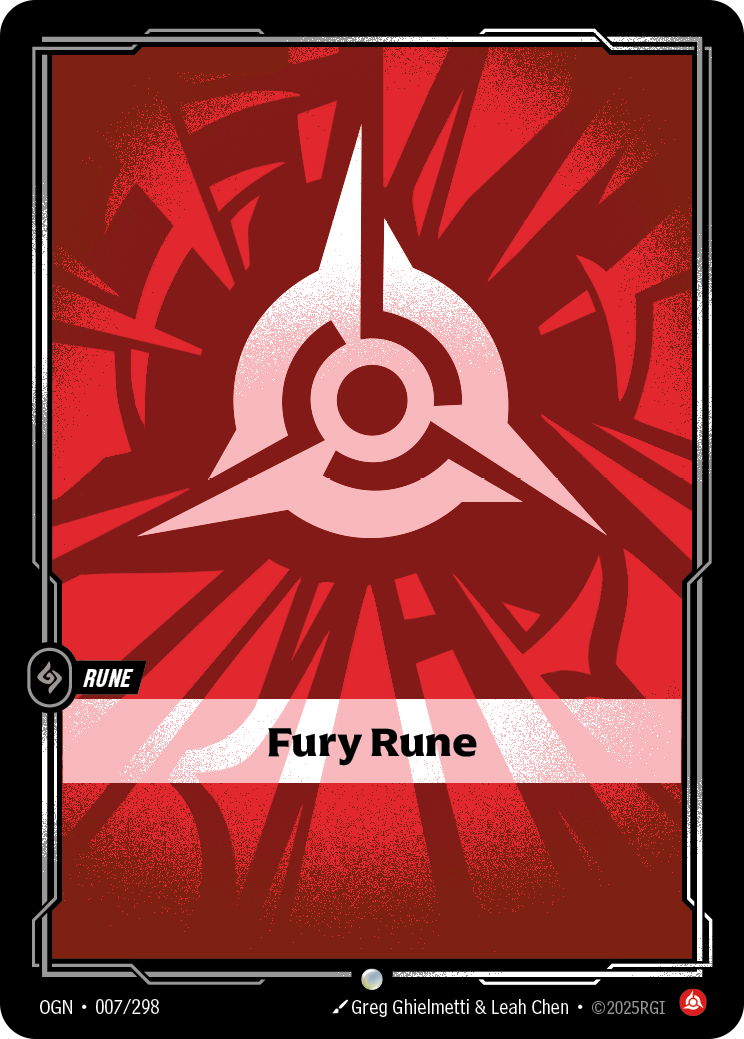
You take the top 2 cards of your Rune Deck — the separate 12-card rune deck — and add them to your rune pool, ready to spend immediately. Because the Rune Deck holds exactly 12 cards, you get 6 guaranteed turns of channeling; once it runs out, channel produces no more runes, but the game continues with no penalty.
One exception: whoever plays second gets 1 extra rune on the first turn only (so 3 instead of 2), to offset the disadvantage of acting later.
D — Draw
You draw 1 card from your Main Deck, the 40-card main deck. The automatic phases are over — now it's your move.
The Action Phase
Once the ABCD sequence is done, the part where you really play begins. In the action phase you can do the following, in no fixed order and as many times as you want while you have resources:
- play units, spells and gear from your hand;
- move your units between your base and the battlefields;
- start combat by moving units onto an enemy battlefield (a showdown);
- activate your cards' abilities;
- cast spells, subject to their speed.
There is no hand-size limit: you can end the turn with as many cards as you like. When you are done you pass and the turn goes to your opponent, who immediately begins their Awaken phase.
During your turn your opponent is not entirely passive: they can respond with Reaction-speed effects. To learn when and how, read the guide to spell speeds and to how the chain works.
Why phase order matters
The sequence is not arbitrary. Scoring happens in the Beginning phase before you play anything: to score a hold point you must already control the battlefield at the start of the turn — conquering it during your action phase is not enough. Conquering a zone on your turn, then, sets up the point for the next turn.
Likewise, runes recover during Awaken: that phase tells you how many resources you will truly have when you get to play. Planning your turn means counting Awaken and Channel ahead of time.
Summary: the turn in 5 steps
- A — Awaken: ready all exhausted cards.
- B — Beginning: resolve start-of-turn triggers and score 1 point per controlled battlefield.
- C — Channel: take 2 runes from the Rune Deck (3 on the first turn if you play second).
- D — Draw: draw 1 card from the Main Deck.
- Action: play cards, move, fight and activate abilities; then pass.
Want to keep going? Dive into the rune system: energy and power, or jump straight to combat and showdowns.
Test yourself
Question 1What does the acronym ABCD stand for in Riftbound's turn structure?
Question 2What happens during phase A — Awaken?
Question 3In phase B — Beginning, how many points do you score for each battlefield you control?
Question 4How many runes do you normally channel in phase C — Channel?
Question 5How many cards does the Rune Deck contain and how many channel turns does it guarantee?
Question 6What happens when the Rune Deck runs out?
Question 7What exception applies to the player going second, and when?
Question 8From which deck and how many cards do you draw in phase D — Draw?
Question 9According to the guide, what can you NOT do during the Action Phase?
Question 10Why does phase order matter for scoring a hold point?
Comments
Log in to comment.