Tempo vs Value in Riftbound: When Control Beats Power
In Riftbound every game is a race between two opposing ideas: who controls the table right now and who stockpiles resources to dominate later. Understanding the difference between tempo and value is what separates a good play from a winning play.
If you are just starting out, lock down the core game flow first with our how to play Riftbound guide: here we assume you already know turns, the board, and scoring.
What tempo and value mean
They are two different ways of measuring who is ahead.
- Tempo: it describes who controls the game at this exact moment. It shows up as board control, the ability to force reactions from your opponent, taking battlefields, and the power to dictate the pace of every exchange.
- Value: it describes the raw strength of individual cards and the resource advantage that builds up over the long run, winning through attrition.
The core trade-off
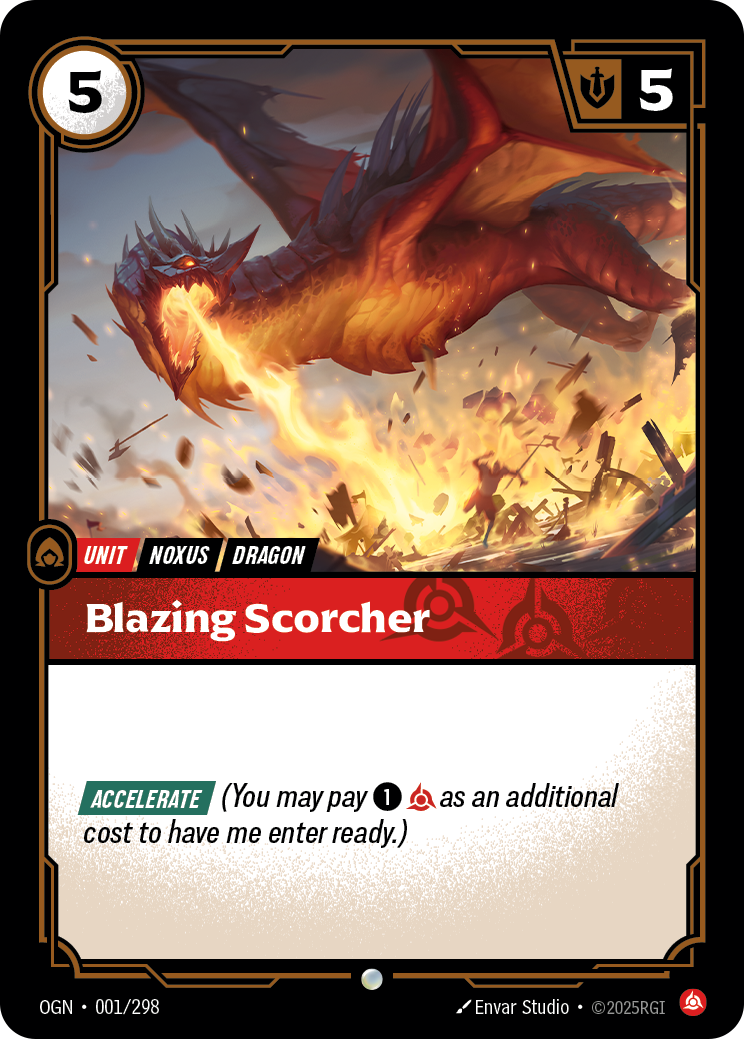
Here is the tricky part: you can make a very high-value play and still lose control of the game. A single powerful unit can be beaten by several small plays that pressure the battlefields and force your opponent to respond turn after turn.
The difference is all about timing: value is theoretically stronger over distance, but tempo delivers immediate impact. And in many games, immediate impact decides who reaches the finish line first.
Why tempo dominates in Riftbound
This is not an opinion, it is a consequence of how the game is built. Three reasons:
- Points are scored on battlefields, not through attrition: emptying your opponent's hand is worthless if you are not scoring.
- Winning battlefields early "banks" points: every point taken ahead of time costs your opponent whole turns of recovery just to catch up.
- Scoring ends at 8 points: once someone reaches 6, there is no real "long game" left for value to blossom in.
To dig deeper into how a game closes out, read about the victory conditions and learn to recognize lethal points, the moments when a single turn can seal the deal.
When to prioritize tempo
- During the active contest over battlefields, when every reaction matters.
- When you want to force reactions and strip your opponent of the freedom to develop their plan.
- When momentum matters more than holding the perfect card in hand.
When to prioritize value
Choose TEMPO when
- You are in the active battlefield contest
- You want to force the opponent to react
- Momentum matters more than the perfect card
Choose VALUE when
- You are already ahead on points
- The opponent out-grinds you
- The current battlefield is irrelevant
- When you are already ahead on score: protect the lead instead of risking it.
- When your opponent out-grinds you and you must win the resource war.
- When the current battlefield is irrelevant and it is not worth spending tempo to contest it.
This balance also depends on the nature of your deck: some lists are born aggressive on tempo, others bet everything on value. Knowing which means understanding your deck identity, and sometimes the decision is already made during battlefield selection.
The guiding principle
One phrase to keep in mind every hand: "a good play now almost always beats a great play two turns from now". Think in turns, not in cards. And remember the golden rule: the player forced to respond is almost always the one who is behind.
Summary
Tempo is immediate control, value is long-term power. In Riftbound the scoring structure rewards whoever scores early and forces the opponent to chase: that is why tempo, in most situations, is worth more than raw value. Use value only when you are already ahead or when the game truly slows down.
Continue with battlefield selection to turn this theory into concrete decisions at the table, and revisit the basics in how to play Riftbound.
Test yourself
Question 1According to the guide, what does tempo measure?
Question 2How does one win through attrition according to the definition of value?
Question 3What is the core trade-off described in the guide?
Question 4According to the guide, where are points scored in Riftbound?
Question 5What does it mean that winning battlefields early "banks" points?
Question 6At how many points does scoring end according to the guide?
Question 7According to the guide, after someone reaches which score is there no real "long game" left?
Question 8Which of these is a situation where the guide advises choosing TEMPO?
Question 9According to the guide, when is it best to choose VALUE?
Question 10What is the guiding principle (the "golden rule") cited in the guide?
Comments
Log in to comment.