Spell Speed in Riftbound: Normal, Action, Reaction
In Riftbound, not every spell can be played at any moment. Each card has a speed that determines when you can play it and which windows let it enter the chain. Knowing the three speeds is what separates players who get pushed around from those who can anticipate the opponent.
In this guide we cover the three speeds, how inheritance works between them, and how to use them to pick the right moment. If you need the basics first, start with the how to play Riftbound guide.
The Principle of Inheritance
The three speeds are not separate categories: they form a scale. Every faster speed can do everything the slower ones do, plus its own extra options. It is an "onion" system: the higher speed contains the lower one.
This means a fast card is not just "more reactive": it is also playable in every situation where a slow card would be playable.
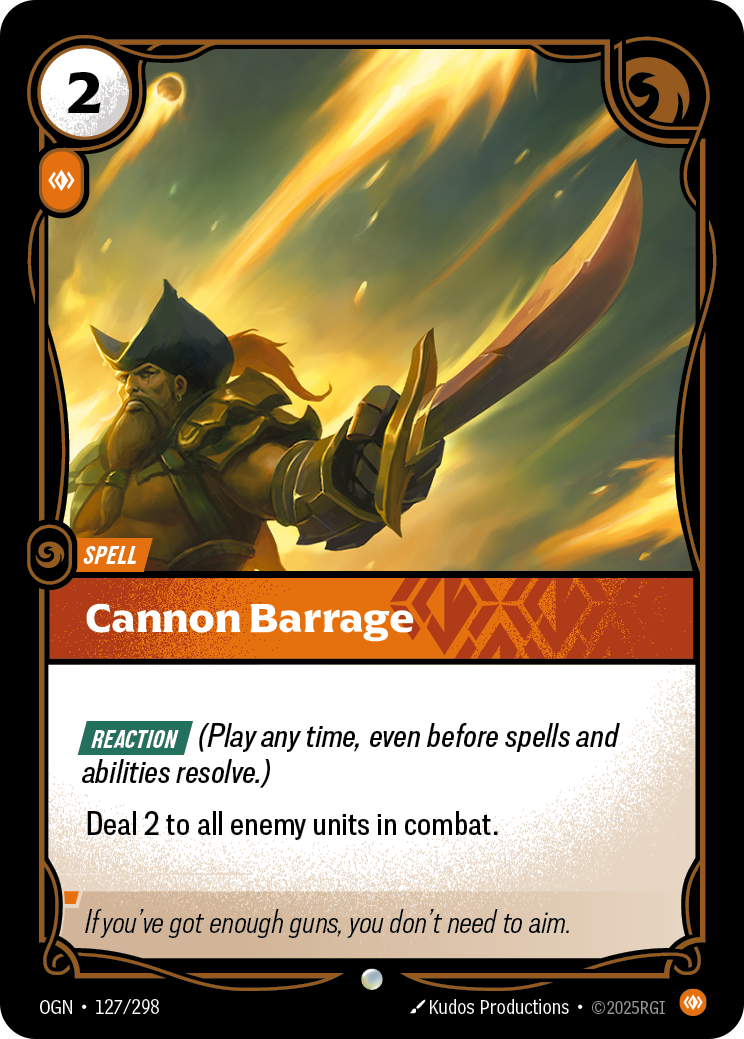
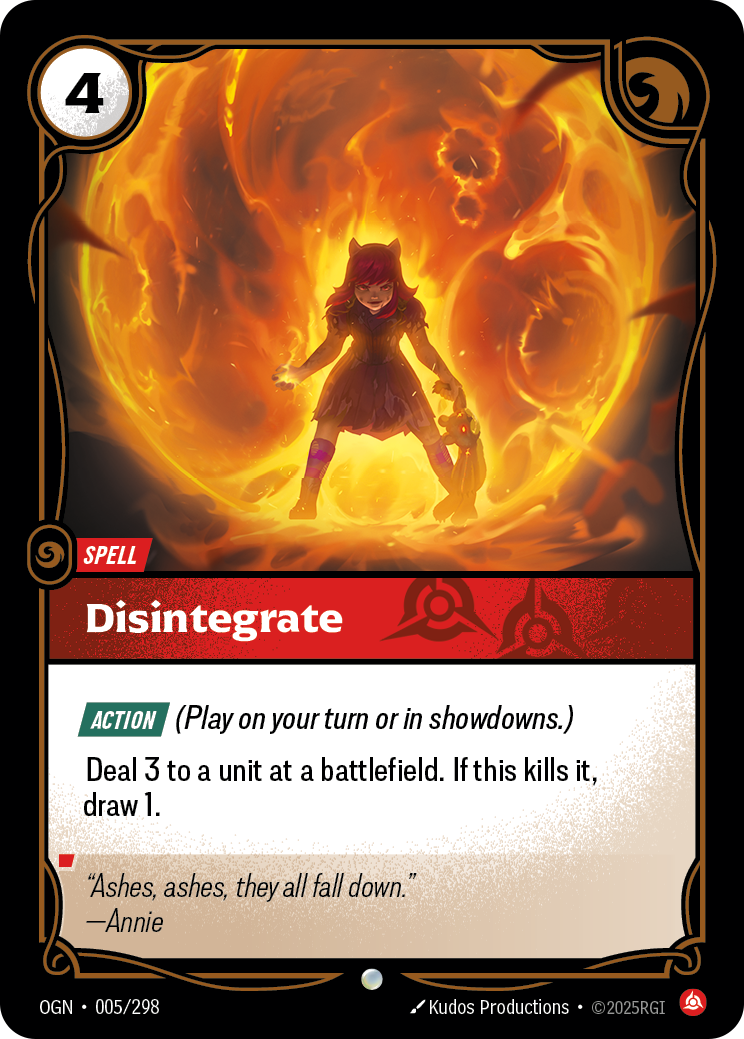
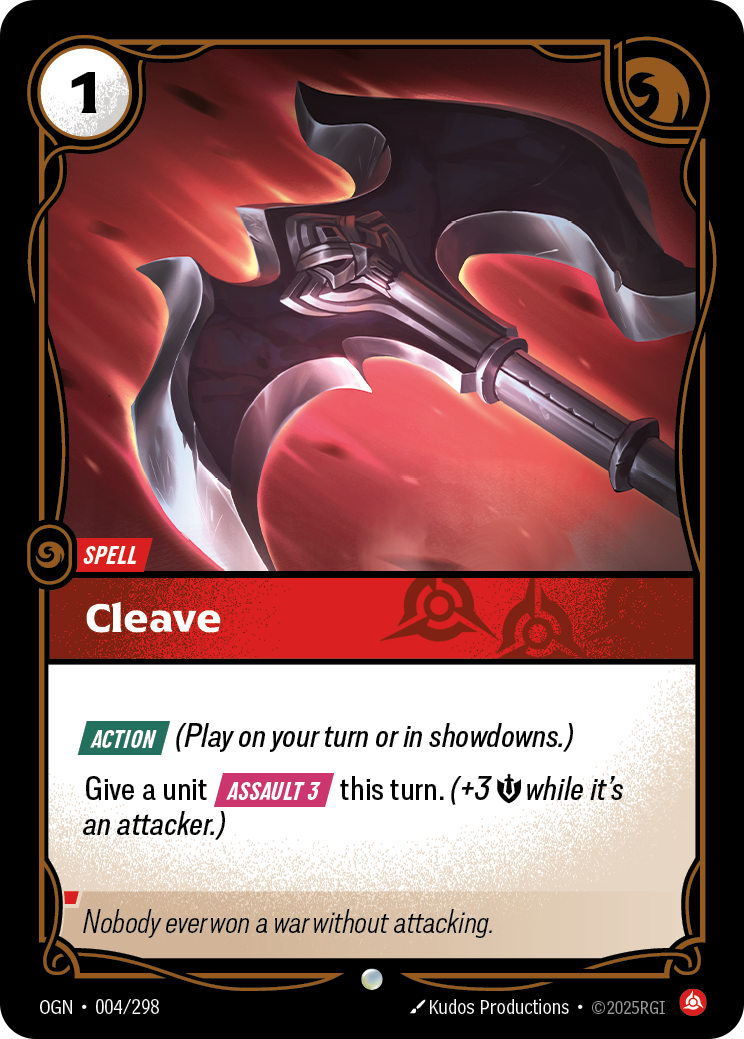
Normal: the Slowest Speed
- Playable only during your action phase, when the chain is fully open (open chain), meaning nothing is waiting to resolve.
- This is the speed of "clear board" actions: typically the cards that develop your board.
- The opponent cannot interrupt you with another Normal: they can only respond with a Reaction.
The key concept here is open chain: if nothing is waiting on the stack, you can cast your Normals. To understand what makes a chain "open," read the dedicated guide on the Chain.
Action: the Medium Speed
- Playable during your action phase.
- Playable during showdowns.
- Playable on an open chain if you hold the focus.
- Inherits all the options of Normal speed.
Action cards are the bread and butter of interaction: they let you step into a fight without being so narrow that they sit dead in hand.
Reaction: the Fastest Speed
- Playable at any moment, as long as you hold the focus.
- Can respond to other Reactions already on the chain.
- Inherits the abilities of both slower speeds (Normal and Action).
Reactions are the tool for getting "the last word" in an exchange: they go on top of the stack and resolve before whatever they interrupted.
Speed, Focus, and the Right Moment
Speed determines when a card can enter the chain, but the actual right to act depends on the focus and on priority. Keeping an eye on both is essential, especially during combat: see the combat and showdown guide.
How to Think During a Game
- Want to develop your board? You need Normal cards and an open chain.
- Want to influence a fight? Look for Action cards.
- Want to answer the opponent's move at the last instant? You need Reaction cards.
Summary
- Three speeds on a scale with inheritance: the fastest also does what the slower ones do.
- Normal: only in the action phase with an open chain.
- Action: action phase, showdowns, or open chain with focus.
- Reaction: any moment with focus, even in response to other Reactions.
Continue with the guide on the Chain in Riftbound to see how these speeds combine on the stack during interaction.
Test yourself
Question 1How many spell speeds exist in Riftbound according to the guide?
Question 2Which is the slowest speed?
Question 3What does the principle of inheritance establish between the speeds?
Question 4When can a Normal card be played?
Question 5With which speed can the opponent respond when you play a Normal?
Question 6Which key concept defines a chain where nothing is waiting to resolve?
Question 7In which situations can an Action card be played according to the guide?
Question 8Which speeds does an Action card inherit?
Question 9What is required to play a Reaction at any moment?
Question 10According to the guide, what does the actual right to act depend on, besides speed?
Comments
Log in to comment.