Riftbound Runes: Energy and Power Explained (Resource Guide)
In Riftbound resources don't work like in many other card games: you don't have a single kind of "mana", but two distinct currencies that you pay in different ways and with different risks. Understanding where runes come from and how they turn into energy and power is the first step to playing well. If you're new to the game, start with the how to play Riftbound guide.
In this guide we'll cover where runes come from, the key difference between exhausting and recycling a rune card, and why that distinction completely changes how you spend throughout the game.
The Rune Deck and the Channel Phase
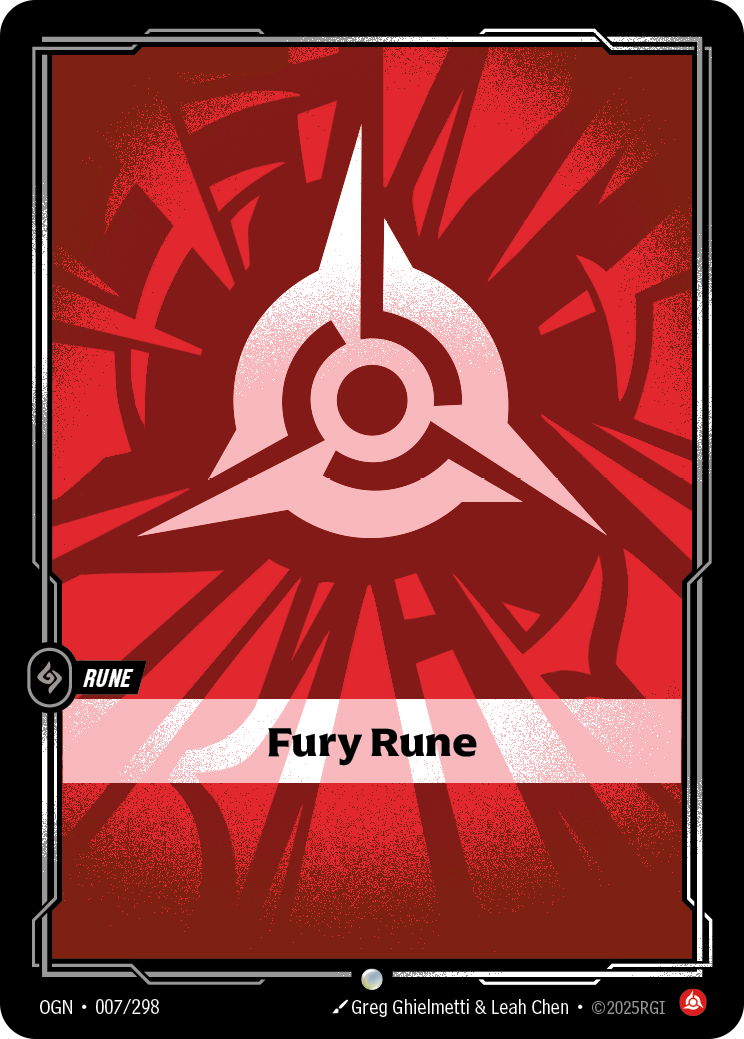
Alongside your Main Deck you have a Rune Deck made of 12 cards kept separate. These cards aren't drawn: they fuel your resource engine.
- Each turn, during the Channel Phase, you take the top 2 cards of the Rune Deck and add them to your resource pool, where they are immediately spendable.
- Channeling 2 runes per turn from a 12-card deck guarantees 6 turns of channeling (12 divided by 2). Once the Rune Deck is empty you channel no new runes, but the game continues.
- If you play second you get a small compensation: +1 rune on the first turn only, so you channel 3 instead of 2.
Energy: the colorless resource
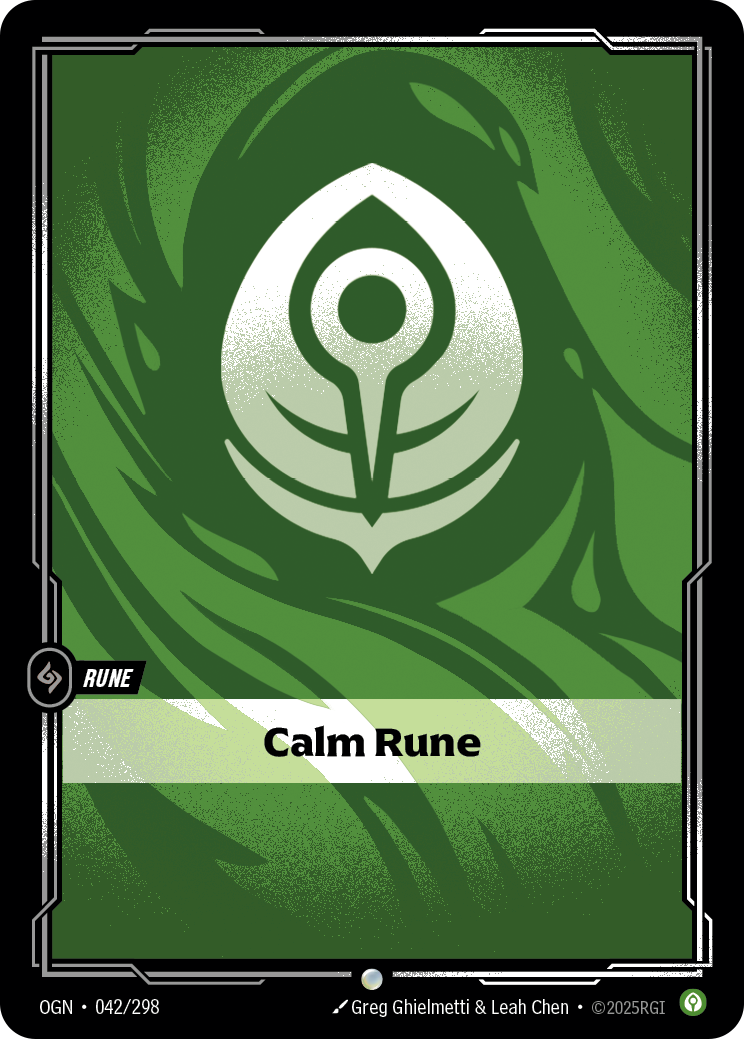
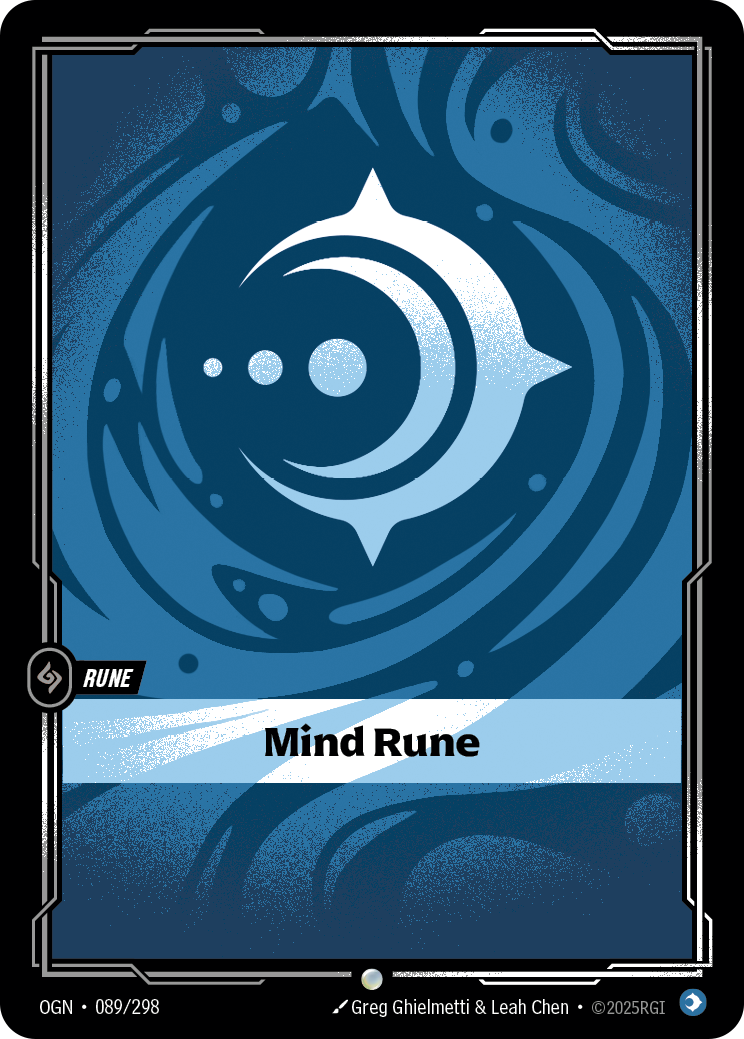
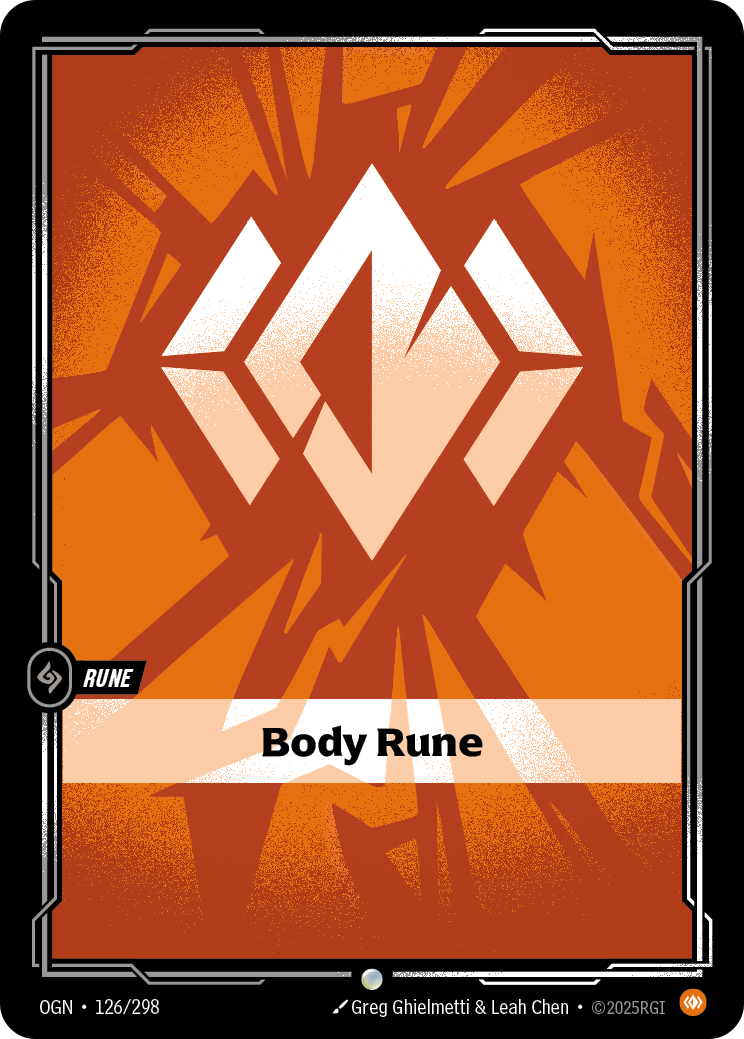
Energy is a colorless resource: any rune works to produce it, the card's color is irrelevant.
- To pay energy you must exhaust a rune, rotating it sideways.
- Exhausted runes aren't lost: they become available again during the Awaken Phase of the next turn. For the full cycle see the turn structure.
- It's a renewable, low-risk resource: what you spend today comes back tomorrow.
Power: the color-bound resource
Power, on the other hand, is tied to the rune's color and comes in three forms:
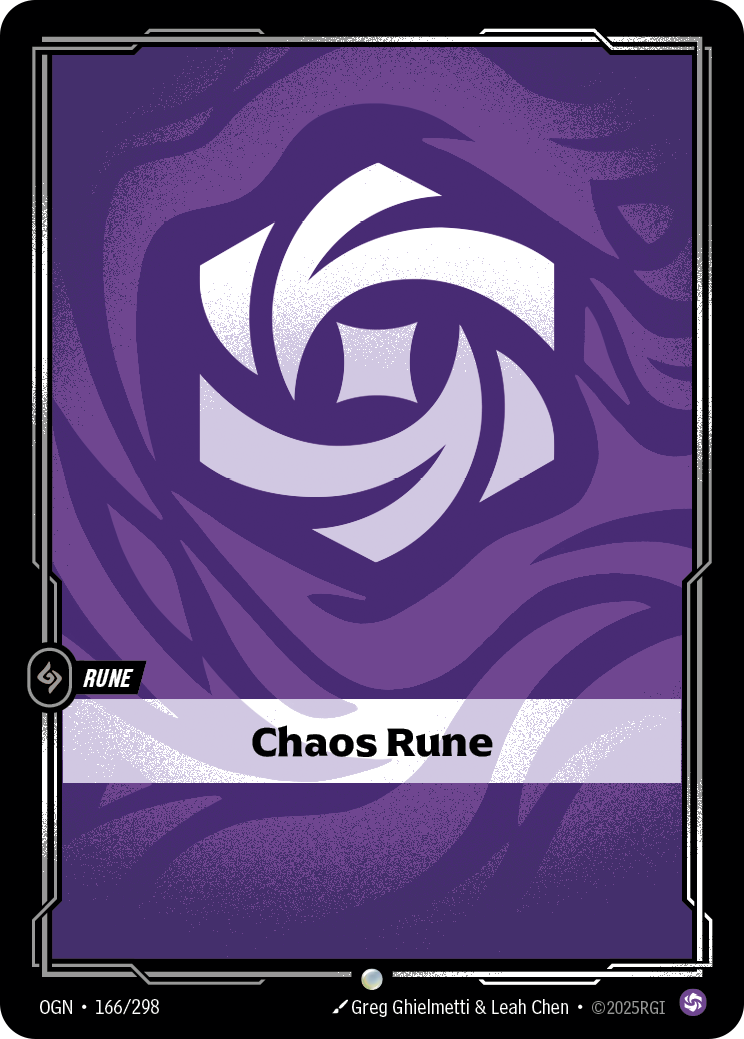
- Fury Power: produced only by Fury runes.
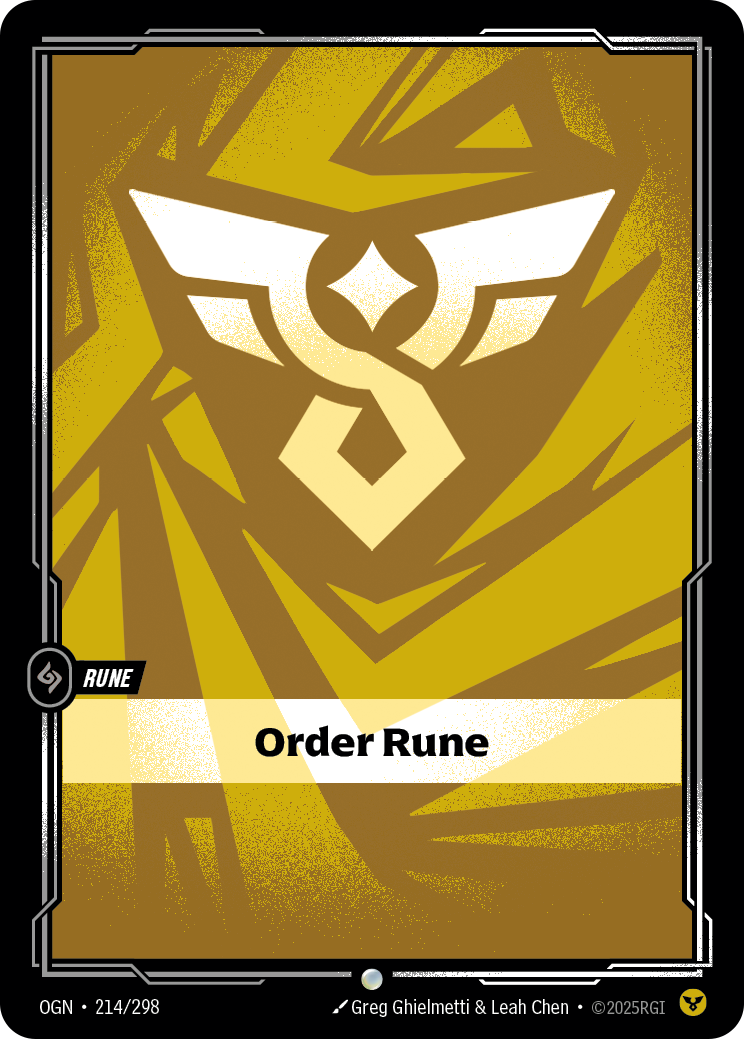
- Order Power: produced only by Order runes.
- Rainbow Power: produced by any rune.
Paying power costs much more: you must recycle the rune. The card leaves the pool and is placed face down on the bottom of the Rune Deck. This permanently shrinks your pool until that rune is channeled again many turns later. It is therefore a high-risk resource.
The intermediate step: runes, pool, cards
→
→
A detail that confuses beginners: runes don't pay for cards directly. There is always a step in between.
- You exhaust a rune, and 1 unit of energy enters your pool.
- You spend that energy from the pool to play the card you want.
- The energy in the pool is always colorless, regardless of which rune generated it.
How to manage your resources
The difference between exhausting and recycling drives every choice you make:
- Keeping runes un-exhausted "threatens" responses against your opponent without spending anything: it's free pressure.
- Power costs are riskier early in the game, when every rune counts, and safer toward the end, when your pool is wide.
- Avoid spending power reactively on low-impact plays: a poorly recycled rune can cost you whole turns of development.
There's also an advanced technique for "holding" energy between phases, called floating, which we cover separately.
Summary
The Rune Deck feeds your pool 2 runes per turn; energy is colorless and paid by exhausting (renewable), while power is color-bound and paid by recycling (permanent). In between there's always the pool, where all energy is colorless. To tie these concepts together, continue with how to play Riftbound and the turn structure.
Test yourself
Question 1How many cards make up the Rune Deck?
Question 2During the Channel Phase, how many Rune Deck cards do you add to your pool each turn (playing first)?
Question 3What must you do to a rune to pay energy?
Question 4What characterizes energy as a resource?
Question 5What happens to an exhausted rune on the next turn?
Question 6To pay power, what must you do to the rune?
Question 7Which type of power can be produced by any rune?
Question 8If you play second, what compensation do you get?
Question 9According to the guide, how do runes pay for cards?
Question 10Why are power costs riskier early in the game?
Comments
Log in to comment.